

You disputed a debt and asked the collector to validate it, to verify the debt is real, accurate, and yours. That request is exactly what a debt validation letter does. Now the collector has come up short, or gone quiet. So what actually happens next? Understanding your rights at this stage is powerful, because an unvalidated debt sits in a very different legal position than a verified one. Here’s what it means when a collector can’t validate your debt.
What does debt validation actually require?
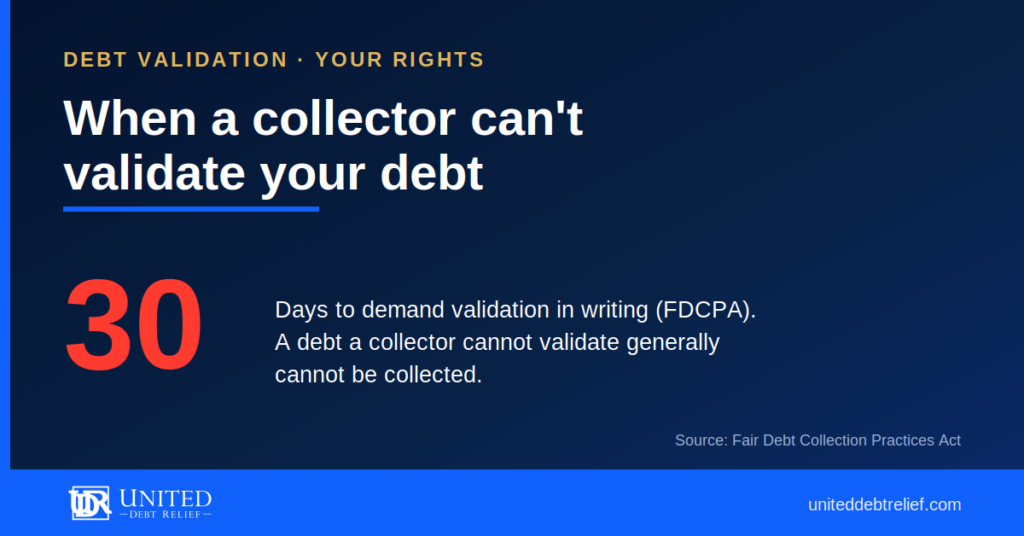
Debt validation requires a collector to send written verification of the debt before it can keep asking you to pay. Under the Fair Debt Collection Practices Act (FDCPA), when you dispute a debt in writing within 30 days of a collector’s initial notice, the collector must stop collection activity until it provides verification of the debt. Validation generally means showing the amount owed, the original creditor, and that the collector has the right to collect. Until the collector provides that, it isn’t supposed to keep pressing you for payment.
What happens when they can’t validate it
When a collector can’t validate the debt, three things follow: collection has to pause, the credit-report entry becomes disputable, and weak paperwork is usually the reason.
1. Collection must pause. The most immediate consequence: a collector that hasn’t validated a debt it was asked to verify is not supposed to continue collection efforts on it. That means the calls and letters demanding payment should stop until (and unless) proper verification is provided.
2. It can’t be a verified debt on your credit report. If a collector reports a debt to the credit bureaus, that information must be accurate. An unvalidated, disputed debt that the collector can’t substantiate shouldn’t be sitting unchallenged on your report. You have the right to dispute inaccurate or unverifiable items with the credit bureaus directly under the Fair Credit Reporting Act.
3. The debt may have been sold with poor records. Many debts that can’t be validated trace back to the same root cause: the debt was bought and sold between collection agencies, sometimes multiple times, and the documentation got lost along the way. The buyer may have purchased little more than a spreadsheet with your name and a number, not the paperwork needed to verify the debt is genuinely yours and accurate.
What it does NOT automatically mean
What it does not automatically mean is that the debt vanishes, because an unvalidated debt can still resurface later. Be clear-eyed here, because some online advice overstates this:
- It doesn’t mean the debt legally disappears. A debt that can’t be validated today isn’t necessarily erased forever. The collector could potentially produce verification later, or the original creditor could pursue it through another agency.
- It doesn’t erase a debt you genuinely owe. Validation is about documentation, not forgiveness. If the collector can eventually substantiate a legitimate debt, it can resume collection.
What an inability to validate does give you is leverage and protection: the collection has to stop in the meantime, and an unverifiable mark shouldn’t stand on your credit report.
What should you do when a collector can’t validate your debt?
When a collector can’t validate your debt, your next steps are simple: document everything, dispute the credit-report entry, and avoid anything that could revive the debt.
Keep everything in writing. Document your validation request, the date you sent it (certified mail with a return receipt is ideal), and any response, or lack of one.
Dispute it with the credit bureaus. If the unvalidated debt appears on your credit report, file a dispute. The bureaus must investigate, and information that can’t be verified should be corrected or removed.
Don’t restart the clock carelessly. Be cautious about making a payment or even acknowledging an old debt you don’t recognize, as that can sometimes affect the debt’s status. When in doubt, get guidance before acting.
Watch for re-selling. Sometimes an unvalidated debt resurfaces with a new collector. If it does, your validation rights apply again, make the new collector verify it, too.
How United Debt Relief helps
United Debt Relief helps by putting a vetted Debt Validation specialist on your side, so you are not facing the paperwork and the collector alone. Navigating validation and the back-and-forth with collectors can be confusing and intimidating, especially when they’re persistent. United Debt Relief is a nationwide debt relief company serving all 50 states: through a free consultation, we enroll you with stringently vetted, BBB Accredited, A-rated specialists in our Debt Validation program who help you assert your FDCPA rights, document everything correctly, and respond to whatever a collector sends back. We don’t guarantee a specific outcome, results vary, but making a collector verify the debt, and holding the line when it can’t, is almost always worth doing.
Frequently asked questions
If a collector can’t validate a debt, do I still owe it?
Possibly. Validation is about whether the collector can verify the debt right now. The collection must pause until it verifies, and an unverifiable item shouldn’t stay on your credit report, but a legitimate debt isn’t automatically forgiven.
Can the collector come back later with verification?
Yes. If a collector later produces proper verification, it can resume collection. That’s why documentation on your end matters.
Should the unvalidated debt be on my credit report?
Not unchallenged. You can dispute inaccurate or unverifiable items with the credit bureaus, who must investigate.
Know your rights, and use them
Know your rights and use them: you don’t have to pay a debt just because a collector says you owe it. Make them verify it, and know exactly where you stand when they can’t. Get your free consultation and we’ll help you handle it. This is general information, not legal advice, and results vary by individual circumstances.