

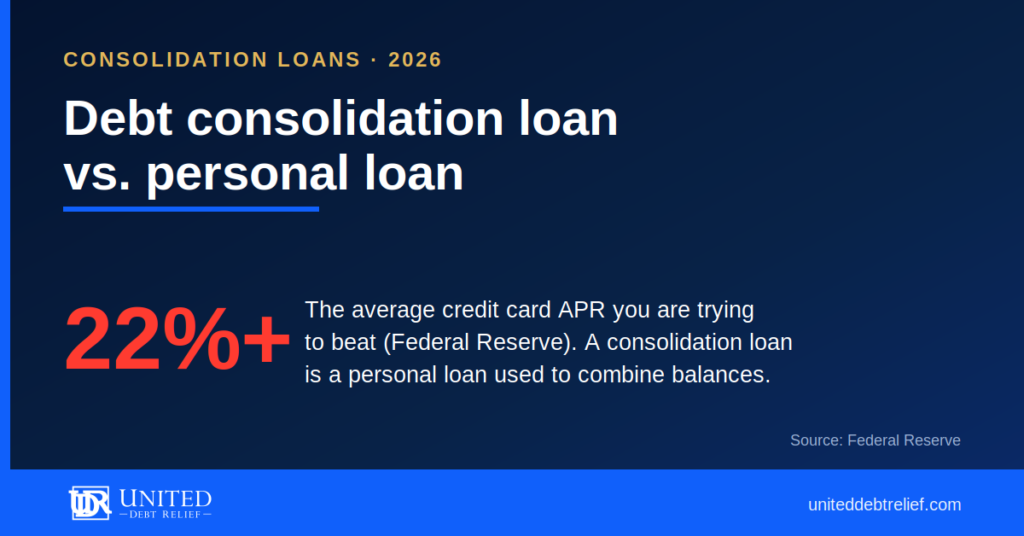
If you’re researching ways to tackle debt, you’ve probably seen both terms: “debt consolidation loan” and “personal loan.” They sound different, and people often assume they’re separate products. The reality is more nuanced, and understanding the overlap helps you choose wisely. With card accounts assessed interest averaging an APR of 22.15% as of May 2026, according to the Federal Reserve, replacing high-interest balances with a single fixed-rate loan is one of the more popular debt strategies in 2026. Here’s how these two options actually compare.
The short answer
A debt consolidation loan is essentially a personal loan used for a specific purpose: paying off and combining multiple existing debts. In many cases, the underlying product is the same, an unsecured installment loan with a fixed rate and fixed term. The difference is mostly about intent and structure: a consolidation loan is taken out specifically to roll several balances into one, while a personal loan is a general-purpose loan you can use for almost anything.
So the question usually isn’t “which product is better”, it’s “how am I using it, and is it structured to actually help?”
How a debt consolidation loan works
A debt consolidation loan works like this: you borrow a lump sum and use it to pay off multiple debts, typically high-interest credit cards. From then on, you have a single monthly payment at a fixed interest rate, ideally lower than the blended rate you were paying across all those cards. The appeal is twofold: simplicity (one payment, one due date) and potential interest savings (if the loan’s rate beats your cards’).
Some lenders offering consolidation loans will even pay your creditors directly, which removes the temptation to use the freed-up funds for something else.
How a general personal loan works
A personal loan gives you flexibility, you can use it for a home repair, a medical bill, a major purchase, or yes, consolidating debt. The mechanics (fixed rate, fixed term, set monthly payment) are the same. The risk is discipline: because the money lands in your account, it’s on you to actually pay off your other debts with it rather than spend it elsewhere.
What should you compare before borrowing?
Before borrowing, compare four things: the interest rate, the fees, the fixed payoff date, and the discipline the loan requires. Interest rate. Both depend heavily on your credit. The goal with either is a rate meaningfully lower than your credit cards. If you can’t get a rate below your current card APRs, the loan may not save you money.
Fees. Watch for origination fees, which some lenders deduct from your loan amount. Factor them into the true cost.
Fixed payoff date. Both are installment loans, which means a defined end date, a major advantage over revolving credit card debt that can linger indefinitely.
Discipline factor. A consolidation loan that pays creditors directly removes temptation. A general personal loan requires you to follow through yourself.
Which one fits your situation?
A consolidation-focused loan tends to suit someone who specifically wants to combine credit card balances, values the structure of having creditors paid directly, and qualifies for a competitive rate. A general personal loan suits someone who wants flexibility or has a mix of expenses to cover.
But here’s the honest caveat: both require credit good enough to qualify for a worthwhile rate. If your credit has already taken hits, you may not be offered a rate that beats your cards, and in that case, a different path (like a structured settlement program) may serve you better. There’s no single right answer, and results vary based on your credit, income, and balances.
How United Debt Relief helps
United Debt Relief is a nationwide debt relief company serving all 50 states, not a lender. That independence matters: we’re not trying to sell you one specific loan. Through a free consultation, we review your situation and enroll you with stringently vetted, BBB Accredited, A-rated professionals in our Debt Consolidation Loans network when a loan fits, and if it doesn’t, we’ll point you toward an option that does, like Debt Settlement. We never charge upfront consultation fees and we don’t guarantee approvals or rates.
Frequently asked questions
Is a debt consolidation loan just a personal loan?
Often, yes, the underlying product is frequently an unsecured personal installment loan. The difference is that a consolidation loan is taken out specifically to pay off and combine existing debts, sometimes with the lender paying creditors directly.
Will consolidating hurt my credit?
Applying triggers a hard inquiry, and the effect varies. Many people see their credit improve over time as they pay down a single loan on schedule and lower their credit utilization. Results vary.
What if I can’t qualify for a good rate?
If you can’t get a rate that beats your current cards, a loan may not help. A free consultation can help you compare alternatives.
Take the first step
The smartest move is comparing your real options before signing anything. Get your free consultation and we’ll help you find the path that actually fits. Results vary by individual circumstances.