

The Summer Financial Gauntlet
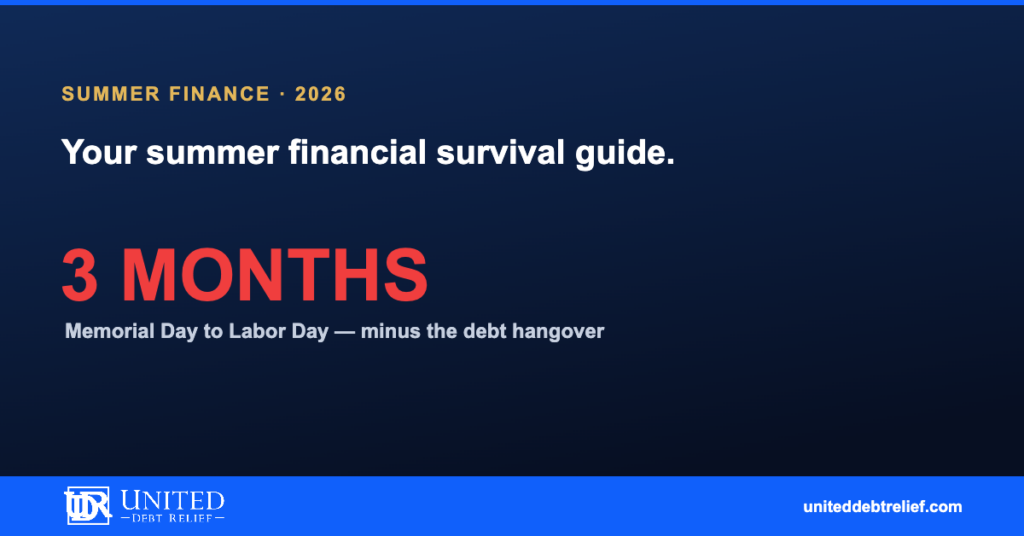
The summer financial gauntlet is a run of back-to-back spending events that can quietly add thousands to household debt before fall arrives. Summer runs from Memorial Day (May 25) to Labor Day (September 7, 2026), exactly 105 days containing some of the most significant consumer spending events of the year. For American households already managing debt in 2026’s high-interest environment, an unplanned summer can add $3,000–$10,000 to credit card balances that take years to eliminate at 22%+ APR.
Phase 1: Memorial Day Weekend (May 23–26, 2026)
Memorial Day weekend is the unofficial launch of summer spending, and one of the highest retail sales weekends of the year. Most “Memorial Day Sales” are not as significant as they appear. Before any Memorial Day purchase over $200, ask: Was this on my planned list before I saw the advertisement? If not, wait 24 hours. A $500 backyard cookout should be pre-planned and cash-funded, not charged.
Phase 2: Vacation Season (June–July 2026)
Vacation season is where most summer budgets break, so set the rules before you leave: a fixed trip budget, cheaper travel choices, and free activity days built into every week.
- Domestic road trips cost 40–60% less than equivalent air travel destinations
- Set a hard vacation credit card limit and agree to it with your family before departure
- Plan 2–3 free activity days within every vacation week, beaches, hiking, free museum days, local events
- Avoid daily dining out for every meal, grocery store lunch and breakfast saves $30–$60/day for a family of four
- National park and state park trips rival resort experiences at $20–$50/night for site fees
Phase 3: July 4th Weekend (July 3–6, 2026)
The Fourth of July is the second-highest consumer spending holiday of summer. Pre-budget this as a distinct line item, average household spending exceeds $150–$200. Attend public fireworks displays (free) rather than purchasing consumer fireworks (expensive and often illegal). Pre-buy food for any gathering rather than impulse-shopping the day of.
Phase 4: Back-to-School Season (July–August 2026)
Back-to-school shopping now begins in July, representing the second-largest retail season of the year after winter holidays. Average per-child spending: $800–$1,500 when clothing, supplies, technology, and sports equipment are included.
- Create a specific per-child back-to-school budget including all categories
- Buy last year’s school supplies in August clearance sales rather than current-year premium items
- Wait for your state’s tax-free weekend if available (typically July or August)
- For clothing, shop end-of-season clearance for next fall’s sizes rather than in-season prices
Phase 5: Late Summer Decompression (August)
The final weeks before school resumes are paradoxically some of the most expensive, last-minute vacation extensions, end-of-summer activities, and the psychological “one last hurrah.” Review your summer spending total in early August and compare it to your pre-summer plan. If over budget, reduce spending in remaining weeks, do not justify continued overspending.
Phase 6: Labor Day (September 7, 2026), The Financial Reset
Labor Day is the financial reset point for summer, and totaling what you spent now keeps summer balances from rolling straight into the holiday season. Before Labor Day, complete a full financial reset:
- Total your summer credit card spending and create a payoff plan before holiday season begins adding to balances
- Review your emergency fund balance and restore any that was used
- Update your family budget for fall, school year expenses differ from summer expenses
- If summer spending significantly added to your debt load, get a free consultation before the holiday season adds more
Summer debt doesn’t have to follow you into fall.
Call 1 (888) 802-2092 or get a free consultation. Five programs. All 50 states. Debt settlement carries no upfront fees.
For the latest numbers on what Americans owe, credit card balances, average APRs, and delinquency trends, see our regularly updated Debt Data page. Further reading from official sources: the CFPB’s consumer tools and the Federal Reserve’s G.19 consumer credit report.